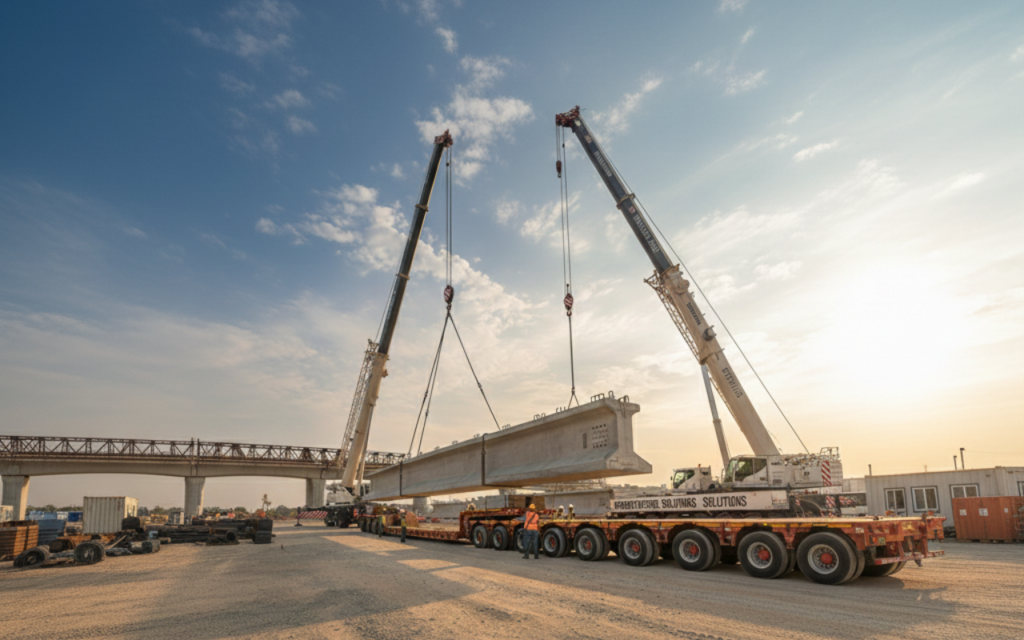
Bridge construction and rehabilitation have become central to America’s infrastructure renewal efforts, driven by historic federal investments, expanding freight networks, and aging transportation systems. Central to these projects is bridge beam transportation, the process of safely and efficiently moving precast concrete beams and steel girders from manufacturing facilities to construction sites.
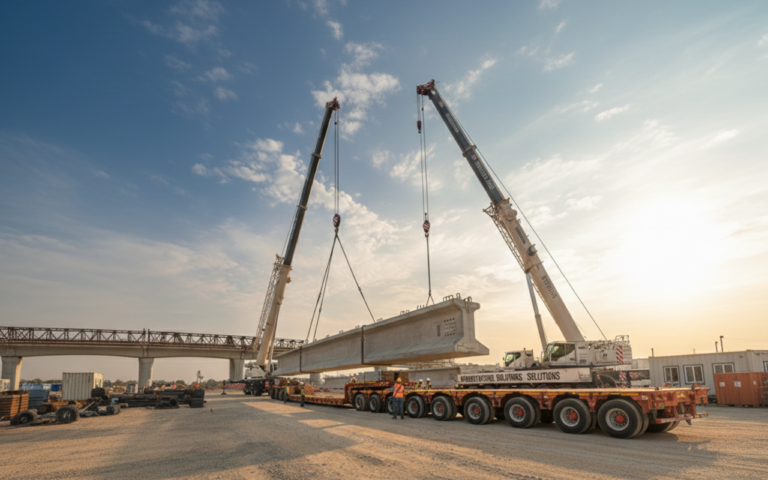
These structural components are among the largest and heaviest freight moved on public roadways. Precast concrete beams can weigh more than 200,000 pounds and reach lengths exceeding 170 feet, while steel girders for major bridges can surpass 300 feet. Proper bridge beam transportation ensures these oversized loads arrive safely, remain structurally intact, and are delivered in alignment with construction timelines.
With federal programs dedicating billions toward bridge reconstruction and modernization, expertise in bridge beam transportation has never been more critical. Recent announcements indicate over $5 billion allocated for large bridge projects to enhance safety, mobility, and economic competitiveness nationwide (transportation.gov).
Need professional heavy haul support for your bridge project? Explore our Heavy Hauling Services to see how we can streamline your logistics.
The Current Landscape of Bridge Investment
Federal infrastructure funding has prioritized bridge safety, modernization, and resilience. The Bridge Investment Program, established under the Bipartisan Infrastructure Law (Infrastructure Investment and Jobs Act), represents the largest dedicated investment in American bridges since the original Interstate Highway System (Federal Highway Administration).
Key federal funding highlights include:
- $40 billion over five years to ensure bridges remain safe, support freight mobility, and strengthen the nation’s economic backbone (transportation.gov).
- $635 million directed toward 22 small and mid-sized bridge projects across multiple states.
- $5+ billion committed to restoring and reconstructing nationally significant large bridges.
These investments support job creation, economic growth, and supply chain resilience, making bridge beam transportation a pivotal part of the infrastructure ecosystem.
Why Bridge Beam Transportation Is So Complex
Transporting beams and girders is far more complicated than typical construction materials. Challenges include:
- Extreme weight: Often exceeding legal state and federal thresholds
- Exceptional length: Creating challenges for turning, maneuverability, and road clearance
- Structural sensitivity: Particularly precast concrete, which can crack under improper support
- Regulatory restrictions: Requiring permits, lane closures, escort vehicles, and timing windows
Because of these factors, almost all bridge beam transport qualifies as heavy haul and superload transport, demanding expert engineering, specialized equipment, and precise coordination across multiple agencies.
Ensure your project stays on schedule—partner with specialists in Alcazar’s Transport & Heavy Haul who handle oversize loads with precision.
Structural Sensitivity and Handling
Precast Concrete Beams
Precast concrete beams are engineered to handle compressive forces under static loads. During transport, they are vulnerable to:
- Bending and torsion
- Uneven stress distribution
- Vibration and impact damage
Even minor misalignment or inadequate support can cause microfractures, compromising long-term durability and safety.
Steel Girders
Steel girders present unique challenges:
- Length-related tail swing, especially on urban roads
- Wind-induced oscillation while elevated on trailers
- High center of gravity, requiring advanced load balancing
Modern self-steering axles, hydraulic suspension, and real-time monitoring help mitigate these risks during bridge beam transportation.
Types of Bridge Components and Their Transport Requirements
Precast Concrete Beams
Precast concrete is widely used due to quality control, durability, and faster onsite assembly. Beam types include:
- I-Beams: Shorter spans, typically for small bridges
- Bulb-Tee Beams: Medium spans with higher load capacity
- Box Beams: Long spans designed for heavy traffic
Proper bridge beam transportation ensures minimal stress, safe handling, and efficient delivery.
Steel Girders
Steel girders are essential for long-span bridges, elevated interchanges, and major overpasses. Transport requires:
- Extendable, self-steering trailers to reduce tail swing
- Escort vehicles and police coordination
- Wind and weather monitoring
Routes often require broader turning radii and minimal overhead obstructions, emphasizing the need for specialized trailers and careful planning.
Specialized Equipment for Bridge Beam Transportation
Heavy Haul Trailers
Heavy haul trailers are engineered for extreme loads. Features include:
- Hydraulic suspension systems for weight distribution
- Multi-axle configurations (10–20+ axles) for legal compliance
- Extendable frames for long beams
- Padded cradles to prevent cracks and vibration damage
Paired with high-torque tractors, these trailers safely move oversized loads over long distances.
Prime Movers and Support Assets
Support vehicles enhance safety and compliance:
- Pilot cars to alert traffic
- Police or DOT escorts for lane management
- Survey vehicles for real-time route validation
Route Engineering: Planning for Success
Route planning ensures bridge beam transportation is efficient and safe. Key considerations include:
- Bridge load limits – verifying the infrastructure can support combined weight
- Height clearances – power lines, signage, and overpasses
- Turning radii – accommodating oversized beams
- Roadway strength – preventing structural stress or pavement damage
Pre-move assessments often include digital mapping, physical surveys, and utility coordination. Temporary modifications, such as raising power lines or removing signage, may be required.
Plan with confidence: Our heavy haul services include route engineering and pre-move assessments to ensure smooth delivery.
Permitting and Regulatory Compliance
Bridge beam transport is regulated through state and federal permits, which require:
- Engineering analysis of the load and route
- Certified documentation for weight, length, and overhang
- Coordination with multiple agencies
- Proof of liability and specialized insurance
Permit approvals can take 6–12 weeks, making early planning essential. The Federal Highway Administration (FHWA) provides guidance on oversize load transport (FHWA Oversize Load Guidelines).
Just-in-Time Delivery and Construction Coordination
Construction schedules are highly sequenced. Beam deliveries must align with:
- Foundation and pier readiness
- Crane availability
- Concrete curing timelines
- Traffic control windows
Just-in-time delivery avoids costly storage, reduces safety risks, and ensures beams are installed efficiently. Professional transport coordinators integrate real-time weather updates, crane scheduling, and traffic planning into delivery timelines.
Safety, Risk, and Public Impact Management
Safety is critical for bridge beam transportation:
- GPS tracking and real-time load monitoring
- Weather contingency planning
- Emergency response coordination
- Public notifications and lane management
Even minor shifts in the load can compromise beams or girders. Experienced heavy haul teams maintain public safety, structural integrity, and project timelines.
Environmental and Sustainability Considerations
Modern bridge beam transportation also focuses on reducing environmental impact:
- Optimized routes to reduce fuel consumption and carbon emissions
- Careful handling to prevent pavement damage
- Minimizing noise and community disruption
- Compliance with federal environmental regulations
Sustainable transport practices benefit both project efficiency and community goodwill.
Real-World Bridge Projects
- Harbor Bridge, Corpus Christi, TX: One of the largest concrete segmental bridges in the U.S., requiring extensive beam transportation (Wikipedia)
- Francis Scott Key Bridge, Baltimore, MD: Replacement project highlights steel girder transport planning (Wikipedia)
- Hundreds of municipal bridges nationwide rely on federal funding and professional heavy haul services (transportation.gov)
Best Practices for Successful Bridge Beam Transportation
- Engage heavy haul specialists early in project planning
- Conduct comprehensive route surveys and clearance studies
- Secure permits and regulatory approvals well in advance
- Coordinate just-in-time delivery with construction schedules
- Monitor weather and load conditions continuously
- Implement emergency response and contingency protocols
- Utilize modern equipment designed specifically for heavy and long loads
Technological Innovations in Bridge Beam Transportation
Recent advancements have transformed the industry:
- Telematics and GPS tracking for real-time monitoring
- Self-steering multi-axle trailers to reduce tail swing
- Load sensors and vibration monitoring to protect beams
- Digital route mapping and simulation to optimize travel paths
Leverage the latest tech for your project—our heavy haul services use advanced equipment and monitoring systems.
Conclusion: Transport as a Strategic Advantage
Bridge infrastructure projects are vital for mobility, public safety, and economic growth. Bridge beam transportation ensures massive precast concrete beams and steel girders reach construction sites efficiently, safely, and on schedule.
Partnering with experienced heavy haul providers like Alcazar’s Transport & Heavy Haul turns logistics from a potential bottleneck into a strategic advantage, helping contractors deliver resilient, modern bridges on time and within budget.
Ready to streamline your bridge project logistics?
Trust our expertise in bridge beam transportation, heavy haul, and superload services to keep your project on track. Request a consultation and learn more about our capabilities today: Alcazar’s Transport & Heavy Haul