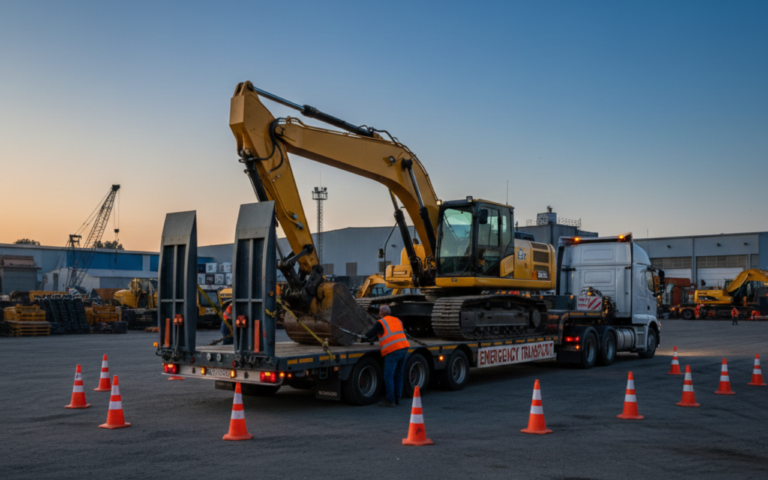
Equipment breakdowns don’t follow schedules. When a critical excavator fails during a time-sensitive highway project, or a mining operation loses its primary haul truck, every hour of downtime translates directly to lost revenue and cascading project delays. Emergency heavy equipment transport—expedited delivery prioritizing speed over cost—has become an essential service for industries where equipment downtime can cost $50,000-500,000 per day.
This guide explains what qualifies as emergency transport, how it differs from standard services, typical timelines and costs, and when expedited transport makes financial sense despite premium pricing. Understanding these factors helps decision-makers respond effectively when equipment crises occur.
What Defines Emergency Transport?
Emergency transport isn’t simply fast delivery—it’s a complete reorientation of logistics priorities. Standard heavy haul transport optimizes for cost efficiency, utilizing existing equipment availability and consolidating shipments when possible. Emergency transport prioritizes speed above all else, even if it means significantly higher costs.
Emergency Transport Characteristics:
- Immediate equipment allocation: Diverting trailers from other jobs
- Expedited permitting: Rush processing at premium fees
- 24/7 operations: Continuous driving within legal hours-of-service limits
- Premium pricing: Typically 50-150% above standard rates
- Direct routing: Fastest path regardless of distance optimization
Common Emergency Transport Scenarios
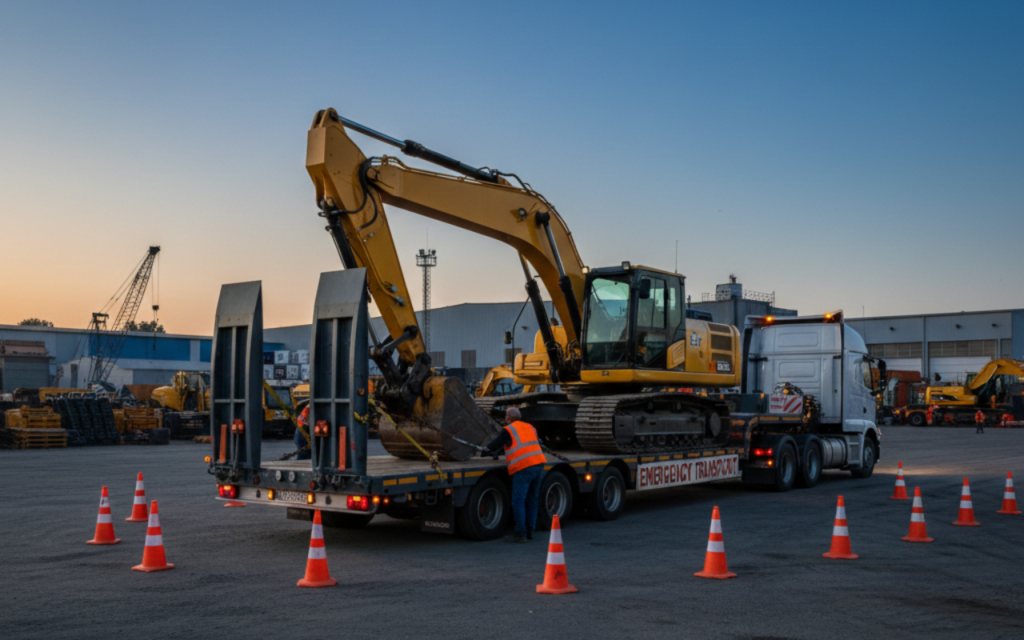
Certain situations frequently trigger emergency transport requests. Equipment failures on critical projects where replacement equipment must arrive within 24-48 hours. Accident damage where damaged equipment must be removed from active job sites immediately and replacement equipment delivered. Project deadline crises when equipment delays jeopardize contract completion penalties. Natural disaster response where equipment must reach disaster areas for emergency infrastructure repair. And rental equipment shortages during peak construction season forcing long-distance emergency deliveries.
Emergency Transport Timelines
Emergency transport timelines vary based on equipment type, distance, and permit requirements. For loads that can move without special permits (under legal size/weight), mobilization can occur within 4-12 hours, with continuous operation thereafter. For oversized loads requiring permits, even emergency permitting takes 24-48 hours minimum in most states, though some offer emergency permit processing for critical infrastructure or disaster response.
Cost Considerations
Emergency transport premium pricing reflects the extraordinary measures required. Equipment reallocation costs compensate for pulling trailers from scheduled work. Rush permit fees can be 2-5x standard permit costs. Continuous operations require team drivers or frequent driver changes. Direct routing foregoes efficient multi-stop consolidation.
Example Cost Comparison:
- Standard excavator transport, 800 miles: $3,200
- Emergency same transport, 36-hour delivery: $6,000-8,000
When Emergency Transport Makes Financial Sense
Despite high costs, emergency transport often delivers positive ROI when downtime costs exceed transport premiums. Consider a highway construction project with $75,000 per day liquidated damages for missing deadlines. If excavator failure threatens a 3-day delay, spending $5,000 extra for 36-hour emergency delivery saves $225,000 in penalties. The decision becomes clear when comparing transport premiums to downtime costs.
How to Request Emergency Transport
Effective emergency transport requests require clear communication of specific details. When calling for emergency service, provide: exact equipment type, model, and weight; precise pickup and delivery locations with GPS coordinates; reason for urgency and required delivery timeframe; equipment operability status; authorization for premium pricing; and contact information for 24/7 coordination.
Professional heavy haul companies maintain emergency response capabilities specifically for these situations, including 24/7 dispatch operations, relationships with state permit offices for expedited processing, and reserve equipment capacity for emergency allocation.
24/7 Emergency Transport Services
At Alcazar’s Transport & Heavy Haul, we understand that equipment emergencies don’t respect business hours. Our 24/7 emergency dispatch team stands ready to mobilize equipment immediately when you need it. We maintain reserve trailer capacity and maintain relationships with permit offices for expedited processing.
Emergency Hotline: + 1 (714) 305-7377 Available 24/7/365 – When equipment downtime threatens your project, call our emergency line immediately. We’ll provide realistic timelines and transparent pricing within one hour of your call. Visit alcazarstransport.com/emergency for more information.